
Introduction
Google Ads PPC is a powerful way for businesses to reach potential customers when they are actively searching for products or services. With the right keywords, compelling ad copy, and well-planned campaigns, you can attract qualified traffic and make better use of your advertising budget.
However, creating a Google Ads campaign is only the beginning. To achieve better results, you need to continuously optimize your ads, targeting, keywords, and budget. In this guide, we’ll explore practical Google Ads PPC tips to improve ad performance, increase clicks, generate leads, and boost conversions.
In the fast-paced world of digital marketing, staying ahead of the competition requires more than just a basic setup. For businesses across the United States, mastering your online presence is essential to capturing the attention of potential customers.
Refining your strategy is the most effective way to improve your campaign return on investment. When you focus on consistent optimization, you ensure that every dollar spent works harder to reach your specific audience.

Using Google Ads (ppc) effectively allows you to remain visible in an increasingly crowded marketplace. By following these expert tips, you can transform your approach and achieve lasting growth for your brand.
Key Takeaways
- Understand the core importance of paid search in modern business.
- Learn how to refine your strategy for better return on investment.
- Discover why consistent optimization is vital for staying competitive.
- Maximize your advertising budget to reach the right target audience.
- Improve your overall visibility in a crowded online marketplace.
Mastering Keyword Strategy for Better Reach
Mastering your keyword strategy is the most effective way to improve your google ads performance. When you align your terms with what users actually type into search engines, you bridge the gap between your business and potential customers. This foundational step in digital marketing ensures that your budget is spent on high-quality traffic rather than irrelevant clicks.
Refining Your Keyword Match Types
Understanding how match types function is essential for controlling your ad visibility. By selecting the right match type, you dictate how closely a user’s search query must align with your chosen keyword.
- Broad Match: Reaches the widest audience by including related searches and synonyms.
- Phrase Match: Targets searches that include the meaning of your keyword, offering a balance of reach and control.
- Exact Match: Provides the highest level of precision by only triggering ads for the specific intent of your keyword.
| Match Type | Control Level | Reach Potential |
|---|---|---|
| Broad | Low | Very High |
| Phrase | Medium | Moderate |
| Exact | High | Low |
Leveraging Negative Keywords to Save Budget
Negative keywords are your best defense against wasted advertising spend. By identifying terms that are not relevant to your products or services, you can prevent your ads from appearing for unqualified searches.
For example, if you sell premium software, you might add “free” or “cheap” as negative keywords. This simple action ensures that your digital marketing efforts remain focused on users who are ready to invest in your solutions.
Utilizing Keyword Planner for Search Intent
The google ads Keyword Planner is a powerful tool for uncovering what your audience truly wants. Instead of guessing, you can analyze search volume and competition to see which terms align with specific user needs.
Focusing on search intent allows you to categorize keywords by whether a user is researching, comparing, or ready to buy. This strategic approach helps you tailor your messaging to meet the user exactly where they are in their journey.
Optimizing Ad Copy for Higher Click-Through Rates
Your ad copy serves as the digital handshake between your brand and potential customers. In the competitive world of ppc advertising, you only have a split second to capture a user’s interest before they scroll past your listing. Crafting messages that resonate immediately is essential for driving meaningful traffic to your site.

Writing Compelling Headlines That Convert
The headline is the most visible part of your advertisement. To grab attention, you must address the user’s specific pain point or desire right away. Clear and concise language often outperforms clever but vague phrasing.
Try to include your primary keyword naturally to show relevance to the search query. When your headline matches what the user is looking for, they are much more likely to click. Always test different variations to see which ones drive the highest engagement.
Highlighting Unique Selling Propositions
Why should a customer choose you over a competitor? Your unique selling proposition (USP) is the answer to that question. Whether it is free shipping, a lifetime warranty, or 24/7 support, make sure this benefit is front and center.
“The goal of your ad copy is not just to get a click, but to attract the right kind of visitor who is ready to engage with your brand.” — Anonymous Marketing Expert
Differentiating your brand helps you stand out in crowded search results. Use your ad space to highlight what makes your business special. This strategy ensures that your ppc advertising efforts attract high-quality leads rather than just random traffic.
Implementing Effective Calls to Action
A strong call to action (CTA) tells the user exactly what to do next. Use action-oriented verbs like “Shop,” “Download,” or “Get a Quote” to create a sense of urgency. A clear instruction reduces friction and encourages the user to take the final step.
| Element | Weak Approach | Strong Approach |
|---|---|---|
| Headline | Our Company Services | Get 20% Off Expert Consulting |
| USP | We are very good | Rated #1 for Customer Support |
| CTA | Click here | Start Your Free Trial Today |
By refining these elements, you can significantly improve your click-through rates. Remember that consistent testing is the key to long-term success in ppc advertising. Keep your messaging fresh and always focus on the value you provide to the user.
Leveraging Google Ads (ppc) Automation and Smart Bidding
Automation has fundamentally changed how advertisers manage their daily tasks within the platform. By using machine learning to analyze millions of signals in real-time, these tools help you place the right bid for every single auction. This shift allows you to focus on high-level strategy while the system handles the technical heavy lifting of Google Ads (ppc) management.

Understanding Automated Bidding Strategies
Automated bidding takes the guesswork out of setting bids manually. Instead of adjusting numbers for every keyword, you define your primary business goal, such as increasing conversions or maximizing revenue. The algorithm then evaluates factors like user location, device, time of day, and browser to predict the likelihood of a conversion.
These strategies are designed to be dynamic and responsive. They adapt to market fluctuations faster than any human could, ensuring your Google Ads (ppc) budget is always working toward your specific objectives.
When to Use Target CPA vs Target ROAS
Choosing the right strategy depends entirely on your current business model. Target CPA (Cost Per Acquisition) is ideal if you want to acquire new customers at a specific, predictable cost. It works best for lead generation campaigns where each conversion has a relatively consistent value.
On the other hand, Target ROAS (Return on Ad Spend) is the gold standard for e-commerce businesses. It focuses on the total revenue generated rather than just the number of sales. Use this when you have products with varying price points and want to prioritize high-value transactions.
| Strategy | Primary Goal | Best For | Key Requirement |
|---|---|---|---|
| Target CPA | Volume of Leads | Service Businesses | Conversion History |
| Target ROAS | Revenue Growth | E-commerce Stores | Revenue Tracking |
| Maximize Clicks | Traffic Volume | Brand Awareness | Budget Cap |
Balancing Manual Control with Machine Learning
While automation is powerful, it should not be a “set it and forget it” solution. You must maintain manual oversight to ensure your brand remains protected and your goals stay aligned with market changes. Regularly reviewing your search terms and negative keyword lists is still a vital part of a healthy Google Ads (ppc) account.
The most successful advertisers treat machine learning as a partner rather than a replacement. By providing the system with high-quality data and clear constraints, you can enjoy the efficiency of automation while keeping full control over your brand’s direction.
Enhancing Landing Page Experience for Quality Score
Success in pay-per-click marketing often hinges on how well your landing page meets the expectations set by your ads. A high-performing ad is only as effective as the destination page it directs users to, which directly influences your Quality Score. When users click your link, they expect to find exactly what was promised in the headline.

Aligning Ad Messaging with Landing Page Content
Maintaining message match is vital for building user trust and keeping bounce rates low. If your ad highlights a specific discount or product feature, that information must appear prominently on your landing page. When the transition feels natural, visitors are much more likely to stay and explore your offer.
Consider these strategies to ensure your messaging stays consistent:
- Use the same keywords in your landing page headlines as you do in your ad copy.
- Ensure the visual style and tone of voice match across both platforms.
- Provide a clear, direct path to the solution you promised in the ad.
Improving Page Load Speed for Mobile Users
Modern users, especially those on mobile devices, expect instant results. If your page takes more than a few seconds to load, you will likely lose potential customers before they even see your content. Improving your technical performance is a non-negotiable part of modern pay-per-click marketing.
You can boost your load speeds by following these technical best practices:
- Compress all images to reduce file size without sacrificing quality.
- Minimize the use of heavy scripts that slow down browser rendering.
- Leverage browser caching to help returning visitors load your page faster.
Designing for Conversion Rate Optimization
Great design is about more than just aesthetics; it is about guiding the user toward a specific action. By focusing on conversion rate optimization, you can turn casual visitors into loyal customers. Every element on your page should serve a purpose, whether it is a button, an image, or a block of text.
Focus on these design principles to maximize your results:
- Place your primary call-to-action button above the fold for immediate visibility.
- Use whitespace to keep the layout clean and prevent user overwhelm.
- Include social proof, such as testimonials or trust badges, to build credibility.
Utilizing Audience Targeting to Reach Your Ideal Customer
Connecting with the right person at the right time is the ultimate goal of modern advertising. When you move beyond basic demographics, you unlock the true potential of pay-per-click marketing. By focusing on specific user behaviors and interests, you ensure your budget is spent on those most likely to convert.

Segmenting Audiences with Customer Match
Customer Match allows you to upload your own data, such as email lists or phone numbers, directly into the platform. This creates a highly personalized experience for your existing clients. You can use this data to:
- Reconnect with past customers who haven’t purchased in a while.
- Exclude current customers from acquisition campaigns to save money.
- Create “Similar Audiences” to find new prospects who share traits with your best buyers.
Retargeting Strategies for Returning Visitors
Not every visitor makes a purchase on their first visit. Retargeting is a vital component of pay-per-click marketing because it keeps your brand top-of-mind for those who have already shown interest.
“The most effective way to improve conversion rates is to stay visible to users who have already engaged with your value proposition.”
By showing tailored ads to people who abandoned their shopping carts, you provide the gentle nudge they need to return. This strategy often yields a much higher return on investment compared to targeting cold traffic.
Exploring In-Market and Affinity Audiences
If you want to expand your reach, look toward In-Market and Affinity audiences. These tools help you find users who are actively researching products or services similar to yours.
In-Market audiences focus on users who are currently in the buying cycle, while Affinity audiences target users based on their long-term interests and lifestyle habits. Integrating these into your pay-per-click marketing strategy allows you to scale your campaigns effectively while maintaining high relevance.
Harnessing the Power of Ad Extensions
Expanding your ad’s visual footprint is a smart way to capture more attention from potential customers. When you use these tools effectively, you improve your online advertising performance by making your listings stand out against competitors. These additions provide extra value to users before they even click on your link.
Maximizing Real Estate with Sitelink Extensions
Sitelink extensions allow you to guide users directly to specific, high-value pages on your website. Instead of sending everyone to your homepage, you can offer links to your latest sales, contact page, or specific product categories. This strategy helps users find exactly what they need in less time.
By providing these shortcuts, you increase the likelihood of a conversion. It is a simple yet effective way to refine your online advertising strategy while giving your audience more options to engage with your brand.
Using Callout Extensions to Build Trust
Callout extensions are perfect for highlighting key benefits that set your business apart from the rest. You can use these short snippets to showcase trust signals like “Free Shipping,” “24/7 Customer Support,” or “Family Owned.” These small details often provide the final push a customer needs to choose your service.
Think of these as your digital elevator pitch. They occupy minimal space but deliver a powerful message about why your company is the best choice in the market.
Adding Location and Structured Snippet Extensions
Location extensions are vital for brick-and-mortar businesses, as they display your address and distance to the user. When combined with structured snippets, you can list specific services or product types to provide a clear overview of your offerings. This combination ensures that users have the essential information required to make a quick decision.
| Extension Type | Primary Benefit | Best Use Case |
|---|---|---|
| Sitelinks | Direct Navigation | Promoting specific product pages |
| Callouts | Highlighting Value | Showcasing unique selling points |
| Location | Driving Foot Traffic | Local stores and offices |
| Structured Snippets | Categorizing Services | Listing brands or service types |
Analyzing Performance Data and Making Data-Driven Adjustments
Data serves as the backbone of every high-performing advertising strategy you build. Without accurate information, you are essentially flying blind while spending your hard-earned budget. By focusing on precise measurement, you can transform raw numbers into actionable insights that drive real business growth.
Setting Up Conversion Tracking Correctly
The first step toward success is ensuring your tracking infrastructure is solid. You must install the Google Ads conversion tag on your website to capture every meaningful interaction. Whether it is a form submission, a phone call, or a product purchase, these signals tell the system exactly what success looks like for your brand.
Verify that your tags fire correctly by using the Tag Assistant tool. If your data is incomplete or inaccurate, your automated bidding strategies will struggle to find the right customers. Precision is key when you want to scale your results effectively.
Interpreting Key Metrics in the Google Ads Dashboard
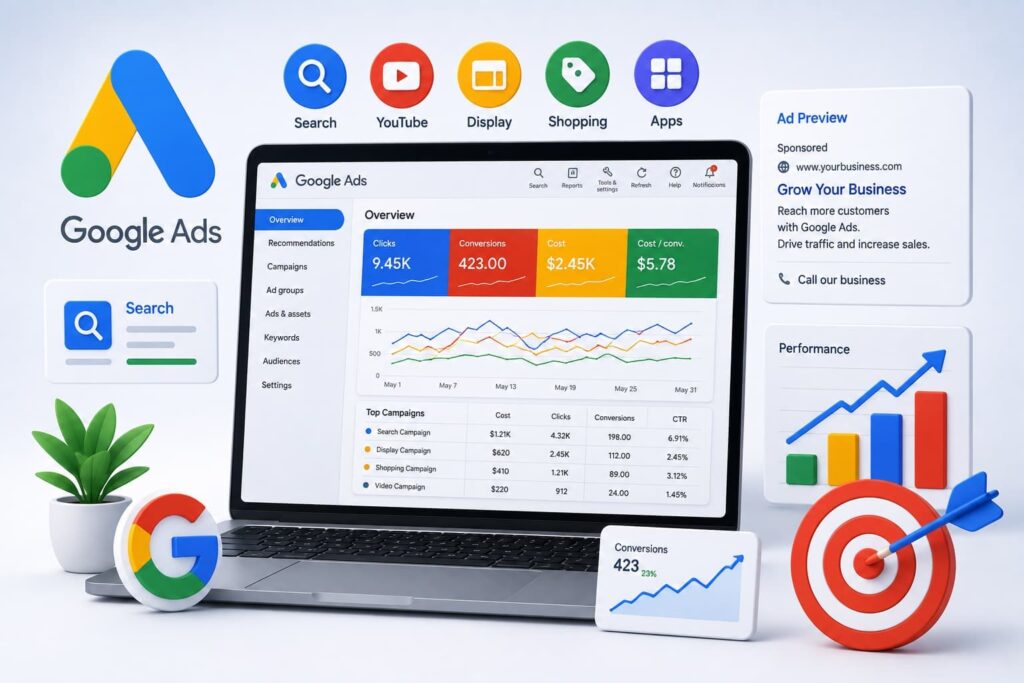
Once your tracking is live, the dashboard becomes your primary command center. You should look beyond simple clicks and focus on metrics that impact your bottom line. Pay close attention to your Conversion Rate, Cost Per Acquisition (CPA), and Return on Ad Spend (ROAS) to gauge true performance.
Identifying trends early allows you to pivot before wasting significant budget. If you notice a sudden drop in your click-through rate, it might be time to refresh your ad copy or adjust your targeting. Staying proactive ensures your google ads account remains competitive in a crowded marketplace.
| Metric | What It Measures | Business Impact |
|---|---|---|
| CTR | Ad relevance | Improves Quality Score |
| CPA | Cost per lead | Determines profitability |
| ROAS | Revenue efficiency | Guides budget allocation |
Conducting Regular Account Audits
Even the best campaigns require routine maintenance to stay healthy. Conducting a monthly audit helps you identify underperforming keywords and outdated settings that no longer serve your goals. This process keeps your google ads strategy aligned with your long-term business objectives.
During your audit, check for search terms that are irrelevant to your offerings. Removing these helps you save money and improves your overall account efficiency. Consistency is the secret to maintaining a high-performing account that delivers results month after month.
Avoiding Common Pitfalls in Pay-Per-Click Marketing
Even the most seasoned marketers can stumble into hidden traps that drain their advertising budget. Success in ppc advertising requires a proactive approach to identifying errors before they impact your bottom line. By staying vigilant, you can ensure your resources are spent on high-value traffic rather than wasted clicks.
Preventing Budget Waste on Irrelevant Clicks
One of the fastest ways to lose money is by paying for clicks that never lead to a sale. You should regularly review your search terms report to see exactly what users typed before clicking your ad. If you notice irrelevant queries, add them as negative keywords immediately.
- Review search term reports weekly to identify non-converting queries.
- Use broad match modifiers carefully to maintain control over your reach.
- Exclude terms that are related to your industry but do not signal purchase intent.
Managing Geographic Targeting Effectively
Many advertisers make the mistake of casting too wide a net. If your business only serves specific cities or states, ensure your location settings are locked to those exact areas. You might be surprised to find your ads appearing in regions where you cannot fulfill orders.
Check your location reports to see where your clicks are coming from. If you see high traffic from areas outside your service zone, exclude those locations to save your budget for your target audience. This simple step keeps your ppc advertising focused on the people who are most likely to become customers.
Avoiding Over-Optimization and Ad Fatigue
It is tempting to tweak your campaigns every single day, but constant changes can actually hurt your performance. Google’s machine learning needs time to gather data and optimize for your goals. If you change your bids or ad copy too frequently, you reset the learning process and create instability.
Furthermore, showing the same ads to the same audience for too long leads to ad fatigue. When users see your ad repeatedly without clicking, your click-through rate drops and your quality score suffers. To prevent this, rotate your ad creative every few weeks to keep your messaging fresh and engaging for your target audience.
Conclusion
Success in the world of paid search requires a blend of technical precision and strategic planning. You now possess the tools to refine your campaigns and drive meaningful growth for your business.
Effective online advertising relies on your ability to adapt to shifting market trends. Keep testing new headlines and audience segments to stay ahead of your competition. Small adjustments often lead to significant gains in your overall return on investment.
The digital landscape changes at a rapid pace. Consistent monitoring of your metrics ensures your budget works as hard as possible. Use these insights to build stronger connections with your target customers every single day.
Your journey toward better performance starts with a commitment to data-driven decisions. Apply these proven tactics to your current online advertising setup to see measurable improvements. Reach out to your team and begin optimizing your account for long-term success right now.
FAQ
How can Google Ads help my business stand out in a crowded market?
Using Google Ads allows your business to gain immediate visibility at the very moment potential customers are searching for your products or services. By refining your digital marketing strategy and consistently optimizing your campaigns, you can improve your ROI and ensure your budget is being used effectively to reach a highly targeted audience in the United States.
What is the best way to manage keywords in a ppc advertising campaign?
Success in ppc advertising starts with a mix of broad, phrase, and exact match types to control your reach. You should also use the Google Ads Keyword Planner to align your bids with search intent and aggressively leverage negative keywords to prevent your budget from being wasted on irrelevant search queries that don’t lead to conversions.
How do I write ad copy that increases my click-through rate?
To boost your online advertising performance, focus on writing compelling headlines that speak directly to the user’s needs. Highlight your Unique Selling Propositions—like what FedEx does with their reliability guarantees—and always include a clear, action-oriented Call to Action (CTA) to encourage users to take the next step.
Should I choose Target CPA or Target ROAS for my automated bidding?
It depends on your specific goals within your pay-per-click marketing strategy. Use Target CPA (Cost Per Acquisition) if you want to get as many conversions as possible within a certain budget. Choose Target ROAS (Return on Ad Spend) if your priority is the actual value or revenue generated from those conversions. Balancing these automated tools with manual oversight ensures your brand, like Apple, maintains its premium positioning.
Why is the landing page experience so important for my Quality Score?
A high-performing ad needs a high-quality destination. To improve your Quality Score, ensure your landing page messaging perfectly matches your ad copy. Additionally, focus on Conversion Rate Optimization (CRO) and technical factors like page load speed, which is critical for mobile users who expect an instant and seamless experience.
How can I reach my ideal customer using audience targeting?
You can use Customer Match to segment your existing data and deliver personalized ads to your current clients. To expand your reach, explore In-Market and Affinity audiences to find people actively researching products like yours. Don’t forget retargeting strategies to stay top-of-mind for visitors who have already interacted with your brand.
What are the benefits of using ad extensions in digital marketing?
Ad extensions increase your “real estate” on the search results page, making your ad more prominent. Use Sitelink extensions to direct users to specific pages, Callout extensions to highlight benefits like “24/7 Support,” and Location extensions to help local customers find your physical storefront easily.
How do I know if my online advertising is actually working?
You must set up conversion tracking correctly to measure the actions that matter, such as sales or lead forms. Regularly monitor your Google Ads dashboard to interpret key metrics and conduct frequent account audits to ensure your campaigns stay healthy and aligned with your long-term business objectives.
How can I avoid wasting my budget in pay-per-click marketing?
Avoid common pitfalls by tightening your geographic targeting so you only show ads where you can actually provide service. Furthermore, monitor your search term reports to eliminate irrelevant clicks and watch out for ad fatigue by refreshing your creative assets regularly. Over-optimization can sometimes lead to diminishing returns, so keep a steady, data-driven hand on your campaign management.