
Introduction
in today’s competitive online world, email marketing strategies can help businesses connect directly with their audience and build lasting relationships. Unlike many other marketing channels, email allows you to communicate with potential and existing customers in a more personal and consistent way.
From creating engaging emails and building a quality subscriber list to using automation and analyzing campaign performance, the right email marketing strategies can help you increase engagement, generate leads, and grow your business. In this guide, we’ll explore practical strategies you can use to make your email marketing more effective.
6. H2 Headings

Focusing on personalized communication helps you stand out in a crowded inbox. When you provide genuine value to your subscribers, you increase your visibility and drive consistent growth for your company.
Key Takeaways
- Direct communication fosters stronger customer loyalty.
- This strategy offers a high return on investment for small businesses.
- Personalization is the secret to higher engagement rates.
- Consistent outreach keeps your brand top-of-mind for consumers.
- Automation tools help you scale your efforts efficiently.
Building a High-Quality Email List from Scratch
Starting your journey to better communication means building a top-notch email list. Email list building is more than just collecting emails. It’s about creating a community eager to hear from you. Focus on quality to get real results from your marketing.
Leveraging Lead Magnets to Capture Interest
To grow your audience, offer something valuable for their email. A lead magnet is a great way to get people to join your list. It could be an e-book, a discount, or a checklist that solves a problem for your audience.
“The currency of the new economy is trust, and the best way to earn it is by providing immense value before you ever ask for a sale.”
When your lead magnet matches your brand, you attract quality subscribers. Make sure the sign-up process is easy. This way, potential customers won’t get overwhelmed.
Optimizing Sign-up Forms for Higher Conversion
Putting your sign-up forms in the right places is key for email list building. Place them in busy areas like your website footer or sidebar. Use pop-ups after visitors have read your content. Consistency is key for visibility.
Keep your forms simple by asking only for a name and email. Fewer fields mean less friction and more sign-ups. Test different button colors and copy to see what works best.
Maintaining List Hygiene for Better Deliverability
Keeping your list clean is crucial for better deliverability. List hygiene means removing inactive subscribers. This boosts your sender reputation and keeps your metrics accurate.
Before removing inactive users, try a re-engagement campaign. This gives them a second chance. A clean list means you focus on those who really care about your business. Regular email list building and cleaning leads to long-term growth.
Mastering Email Marketing for Sustainable Growth
Starting your journey to sustainable growth means building a strong communication base. Treat your email marketing as a key part of your business plan. This way, every email you send helps your business grow over time, not just for a quick win.

Defining Your Target Audience in the United States
To really connect with your customers, you need to know who they are. In the United States, people’s habits and preferences change a lot. By studying your specific market, you can make messages that feel like they were made just for them.
- Look at data like age, where they live, and how much they make.
- Find out what problems your product solves for Americans.
- Use surveys to learn what your audience really cares about.
Setting Clear Goals for Your Campaigns
Good email marketing needs a plan. Without clear goals, it’s hard to tell if you’re really growing your business. Decide what success means before you send out your next email campaign.
Think about these important metrics:
- Open Rates: Check if your subject lines are working.
- Click-Through Rates: See if your content is getting people to act.
- Conversion Rates: Find out how many subscribers are becoming customers.
Choosing the Right Email Service Provider
Picking the right software is key to your growth. You need a tool that grows with your business and has the features to automate tasks. Choosing the wrong tool can cause headaches, so look for platforms with great analytics and easy setup.
When you’re looking at providers, make sure they have:
- Easy-to-use design tools.
- Good segmentation to keep your email marketing focused.
- Helpful customer support as your list grows.
Crafting Compelling Content That Drives Engagement
Great content is the heart of every successful email campaign. Messages that offer real value turn readers into loyal fans. Your goal is to make each message feel personal and relevant.
Writing Subject Lines That Get Opened
Your subject line is your first impression in a crowded inbox. Keep it short and interesting. Stay away from spammy words that might get filtered out.

Use curiosity or clear benefits to grab attention. Instead of “Newsletter #5,” say “5 ways to save time this week.” Test different styles to see what works best for your audience.
Personalizing Content to Build Customer Trust
Personalization is more than just using a subscriber’s name. It’s about making your email campaign fit their interests and actions. When you show you understand their needs, they trust you more.
Use data to segment your emails for a more personal touch. Authenticity is crucial; keep your tone true to your brand. Treating subscribers as individuals boosts engagement.
Balancing Promotional and Educational Value
Don’t send too many sales emails without giving back. Follow the 80/20 rule. Make 80% of your content educational or fun, and only 20% promotional.
Educational content shows you’re an expert and keeps people interested. Share helpful tips, insights, or guides. This builds long-term trust. When you do send a promotion, your audience will be more open to it.
Implementing Effective Email Automation Workflows
Imagine having a digital assistant that works around the clock to nurture your leads and close sales. Email automation lets you scale your outreach while keeping a personal touch. It sends the right info at the right time, thanks to smart triggers.

Setting Up Welcome Sequences for New Subscribers
The first time you meet a new subscriber is key for building loyalty. A good welcome sequence introduces your brand and what to expect. It’s a chance to give them something valuable, like a discount or guide.
“The goal of automation is not to replace the human connection, but to enhance it by delivering the right message at the right time.”
Creating Abandoned Cart Emails to Recover Sales
Many people leave items in their carts without buying. Email automation sends reminders to help you get those sales back. These emails can be the push needed to make a purchase.
Make your recovery emails friendly and useful, not pushy. A direct link to the cart makes it easy to buy again.
Utilizing Re-engagement Campaigns for Inactive Users
Some subscribers might stop opening your emails, which can hurt your delivery rates. Re-engagement campaigns aim to win them back with something new or a request for feedback. Consistency is important, but knowing when to move on is crucial too.
By figuring out why users stopped engaging, you can improve your approach. Good email automation keeps you in their thoughts without flooding them with junk.
Segmenting Your Audience for Targeted Messaging
Segmentation is key to making emails more relevant. Instead of sending the same email to everyone, you can split your list into smaller groups. This way, your email automation speaks directly to what your audience cares about.

Using Behavioral Data to Group Subscribers
Every time someone interacts with your brand, they leave a digital footprint. By tracking what they click or visit, you learn what they like. This behavioral data helps you send messages that match their recent interests.
For instance, if someone often checks out your sustainable living blog, add them to a “Green Living” segment. This way, you can send them content they’ll actually enjoy. Good email automation uses these small clues to keep people engaged.
Creating Buyer Personas for Personalized Outreach
Knowing who your customers are is as crucial as knowing what they do. By making detailed buyer personas, you can see what each group needs. This makes your messages feel personal, not automated.
You might have a persona for “Budget-Conscious Shoppers” and another for “Premium Seekers.” Tailoring your messages to these personas builds stronger customer trust. This personal touch is key to successful marketing in the U.S.
Tailoring Offers Based on Purchase History
Your past sales data is a treasure trove for future sales. By looking at what customers have bought, you can suggest more products they’ll like. This smart email automation strategy boosts your average order value.
Here’s a table showing how different segmentation strategies can improve your marketing:
| Segmentation Strategy | Primary Data Source | Expected Outcome |
|---|---|---|
| Behavioral | Website Clicks | Higher Engagement |
| Persona-Based | Customer Surveys | Improved Brand Loyalty |
| Purchase History | Transaction Records | Increased Revenue |
Designing Visually Appealing Email Campaigns
Visual appeal is key to a successful email campaign. When subscribers open your message, they judge your brand by what they see. A clean, professional look builds trust and encourages engagement.
Ensuring Mobile Responsiveness Across Devices
In the United States, most people check emails on smartphones or tablets. If your layout doesn’t fit smaller screens, you’ll lose your audience fast. Responsive design makes sure your text and images look great on any device.
Before sending, test your templates on different screen sizes. A mobile-first approach ensures a smooth experience for all. This simple step can boost engagement in your email campaign.
Using Consistent Branding and Imagery
Your emails should match your website and social media. Use the same colors, fonts, and logo to make your brand instantly recognizable. This builds trust and authenticity.
Quality images are also crucial. Avoid generic stock photos. Instead, choose images that reflect your brand’s unique voice and connect with your audience.
Optimizing Call-to-Action Buttons for Clicks
The call-to-action (CTA) button is vital. It must stand out to guide the reader. Use contrasting colors that match your brand but grab attention.
Make your button text short, clear, and compelling. Use action words like “Shop Now” or “Get My Guide.” Place these buttons where they’re easy to find to encourage interaction and conversions.
Analyzing Performance Metrics to Refine Strategy
Turning raw numbers into actionable insights is key to growing your business. By carefully reviewing your email marketing data, you can see what works and what doesn’t. This turns guesswork into a clear roadmap for growth.
Tracking Open Rates and Click-Through Rates
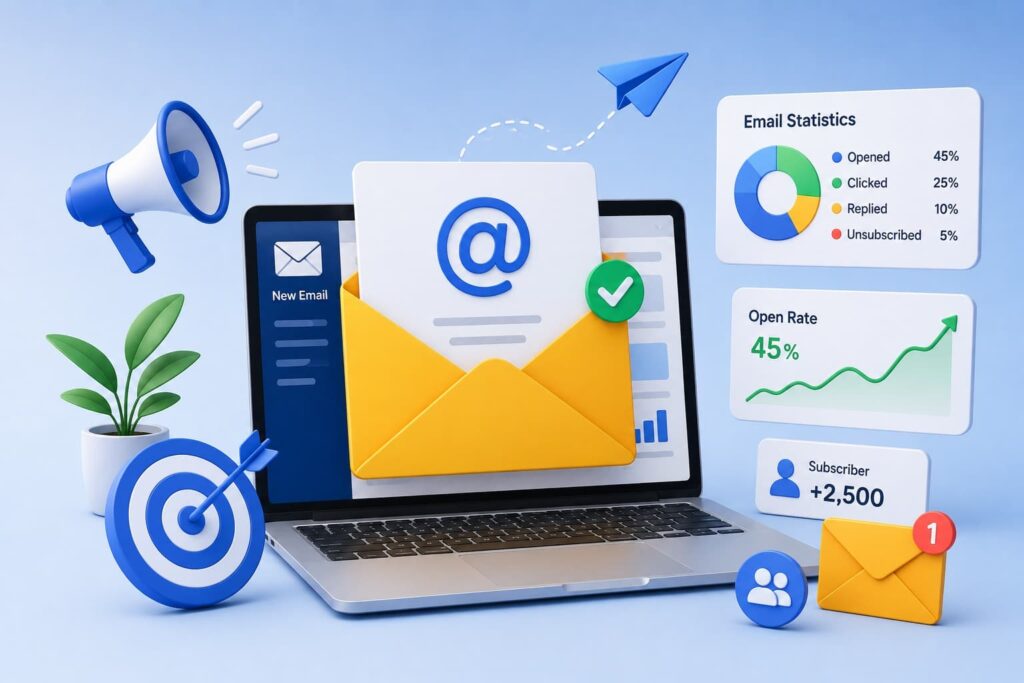
First, look at how many people engage with your messages. Your open rate shows if your subject lines grab attention. It’s about getting a spot in a busy day.
Then, the click-through rate shows if your content is valuable. If people click your links, your message is on target. Watching these metrics helps you adjust before your next campaign.
Understanding Conversion Rates and ROI
Engagement is important, but the goal is to drive action. Conversion rates show how many complete a task, like buying something or signing up for a webinar.
ROI helps you see if your campaigns are worth the investment. When you link your email efforts to revenue, you understand your business’s health. Here’s how these metrics compare:
| Metric | What It Measures | Why It Matters |
|---|---|---|
| Open Rate | Subject line appeal | Initial interest level |
| Click-Through Rate | Content relevance | Engagement quality |
| Conversion Rate | Call-to-action success | Direct revenue impact |
| ROI | Overall profitability | Strategic budget allocation |
Conducting A/B Testing for Continuous Improvement
A/B testing lets you try different things in your email marketing strategy. Send two versions of an email to a small group to see which does better. Then, send the best one to everyone.
“Without data, you’re just another person with an opinion. Testing allows you to let your customers decide what works best for them.”— Industry Marketing Expert
You might test subject lines, button colors, or send times. Continuous improvement is about staying curious and adapting to your audience’s needs. Every test teaches you something new, making your future emails better.
Navigating Legal Compliance and Email Best Practices
When you focus on email list building, you must also prioritize the legal framework that keeps your business safe. A professional marketing program needs more than just creative campaigns. It demands a firm grasp of federal standards. By following these rules, you protect your brand and foster deeper trust with your audience.
Understanding CAN-SPAM Act Requirements
The CAN-SPAM Act sets the rules for commercial email in the United States. It requires that your subject lines and headers accurately reflect the content of your message. You must also include a valid physical postal address in every email you send.
Furthermore, you are legally required to identify your message as an advertisement. Transparency is the key to staying compliant while you continue your email list building efforts. Failing to follow these mandates can lead to significant fines and damage your sender reputation.
Managing Unsubscribe Processes Transparently
Your subscribers should always have an easy way to opt out of your communications. You must provide a clear, visible link that allows users to remove themselves from your list without unnecessary hurdles. Once a user requests to unsubscribe, you are required to process that request within ten business days.
Making the process simple actually helps your email list building strategy by ensuring that only interested people remain on your list. A clean list leads to higher engagement rates and better deliverability. Never hide the unsubscribe button or make it difficult for users to find.
Protecting Subscriber Privacy and Data Security
Data security is a cornerstone of modern digital marketing. You must handle subscriber information with the utmost care to prevent unauthorized access or leaks. Always be clear about how you collect data and what you intend to do with it.
By maintaining high security standards, you demonstrate that you value your customers’ privacy. This commitment encourages long-term loyalty and strengthens your brand. Use the following table to understand the core pillars of a compliant email list building strategy.
| Practice | Action Required | Benefit |
|---|---|---|
| CAN-SPAM Compliance | Include physical address | Legal safety |
| Unsubscribe Link | Make it visible | Higher engagement |
| Data Security | Encrypt user info | Customer trust |
| Permission | Use double opt-in | Quality leads |
Conclusion
Building a successful business means making real connections with your audience. Every email campaign is a bridge between your brand and customers. By offering consistent value and personal touches, you turn readers into loyal fans.
Success comes from understanding your data and improving over time. Use what you learn to make your emails better. A good email campaign meets your subscribers’ needs while staying true to your goals.
Apply these tips to your work every day. First, check your current emails to make sure they’re useful. Your hard work in these areas will help your business grow and make more money.
Share your progress with your team and keep trying new things. Your path to better engagement starts with your next email. Keep your strategy clear and your content focused on your audience.
FAQ
Why is email marketing considered one of the most effective ways to grow a business in the United States?
Email marketing offers a direct way to talk to customers. It’s not tied to social media’s rules. Brands like Patagonia and Warby Parker use it to build loyalty. They send personalized stories and offers, making it a cost-effective way to grow.
What is the best way to approach email list building from scratch?
Start by offering valuable lead magnets, like guides or discounts. Use tools like OptinMonster for sign-up forms. Remember, a smaller, engaged list is better than a big, uninterested one.
How can email automation help me recover lost sales?
Set up workflows, like an abandoned cart sequence, with tools like Klaviyo or Shopify. These messages remind customers to complete their purchase. It’s a way to get back lost revenue without much work.
Which email service provider should I choose for my growing business?
Your choice depends on your needs. Mailchimp is great for beginners with its easy interface. ActiveCampaign is best for advanced automation and CRM needs.
How do I write a subject line that ensures my email campaign actually gets opened?
Create curiosity, urgency, or clear value in your subject line. Nike uses short, direct language. Personalize the subject line with names or recent activity to make it more relevant.
What does “list hygiene” mean and why is it important?
List hygiene means cleaning your database of bad email addresses. A clean list means your emails are more likely to reach the inbox, not spam.
How can I use segmentation to make my email marketing feel more personal?
Segment your list based on behavior or purchases. Sephora sends specific beauty tips and product recommendations. This increases engagement and trust.
Why is mobile responsiveness so critical for a modern email campaign?
Most people check emails on phones. Your design must look good on all screens. Make sure your templates are mobile-friendly for a great experience.
How do I stay compliant with the CAN-SPAM Act in the United States?
Include an easy unsubscribe link and your postal address in the footer. Use clear “From” names and subject lines. Follow the example of The New York Times.
How can A/B testing improve my overall email marketing strategy?
A/B testing lets you try different things, like subject lines or button colors. Analyze the results to make your emails better over time.